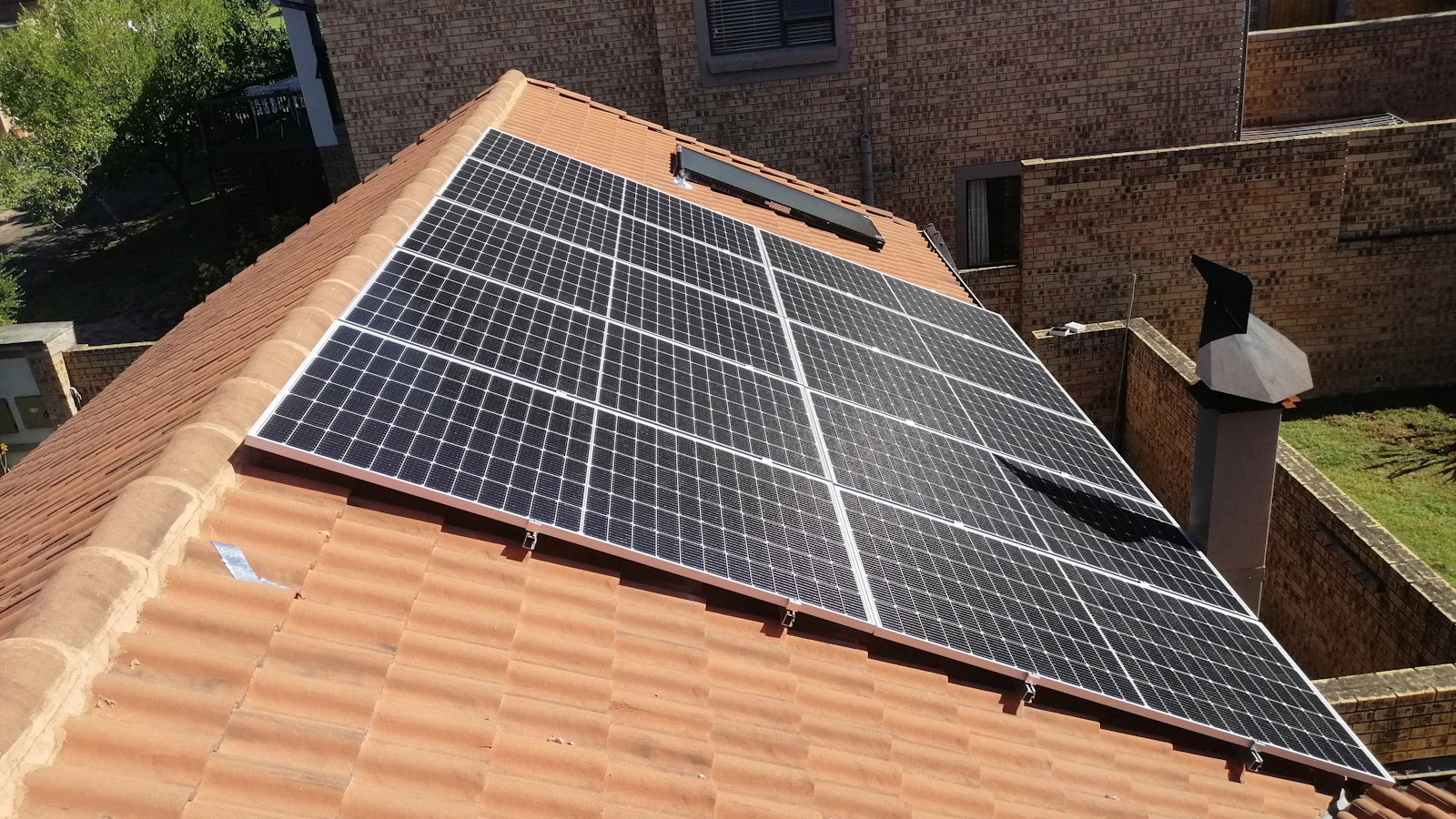
Solar company SEO in North Miami Beach works when the website is built like a product spec: rated for a clear job (calls and quote requests), mounted on a correct Google Business Profile, wired with one service page per system type, and backed by proof a buyer can check. That proof means a Florida license number, NABCEP credentials if you hold them, honest reviews, and savings claims you can substantiate. Inflated savings math and expired tax-credit promises are not just a compliance problem; they cost you trust with the exact searchers you are trying to convert.
Key takeaways
- Define the site's rated output before touching keywords: booked site assessments and qualified quote requests, measured monthly.
- Your Google Business Profile is the mounting. Use your real business name, the most specific category, and a realistic service area.
- Build separate pages for residential rooftop solar, battery storage, commercial solar and condo/HOA solar. Each answers a different buyer's question.
- Publish verifiable proof: your Florida license, any NABCEP certifications, and plain-language explanations of leases, PPAs and net metering.
- Audit every savings and incentive claim. Per the IRS, the residential clean energy credit is not available for property placed in service after December 31, 2025, so "30% back from the IRS" copy on a 2026 homeowner page is a liability.
Scope of this data sheet
Product: the website and local search presence of a solar installer serving North Miami Beach, FL.
Application: residential rooftop solar, battery storage, commercial solar, and solar for condominiums and HOAs.
Operating environment: a crowded South Florida market where buyers have heard a lot of sales pitches and trust very few of them.
Most solar marketing advice reads like a brochure. This reads like a data sheet. Each spec below lists what the component is supposed to do, the minimum acceptable value, and the tolerance, meaning how far off you can drift before performance degrades. Where a rule or law applies, it's linked to the source. Where something can't be verified, it isn't here.
Spec: every claim on your site should survive a skeptical homeowner with a search bar.
Tolerance: zero. One debunked number taints the rest of the page.
If you want the broader picture of how ranking works in this city first, start with our overview of SEO in North Miami Beach. If you only want the solar SEO checks, keep reading. The same specs apply whether you work only in North Miami Beach or cover a wider local SEO Miami footprint across the county.
Spec 1: Rated output (what your site should produce)
A panel has a nameplate rating. Your website needs one too. "More traffic" is not a rating. It is a symptom that may or may not correlate with revenue.
Spec: the site's rated output is qualified leads: phone calls from the service area, quote requests with an address and a utility bill attached, and booked site assessments.
Tolerance: traffic that never produces one of those three outputs counts as heat loss, not production.
Define the output before you choose a single keyword. A solar company SEO plan that chases national informational terms ("how do solar panels work") will produce visitors from Ohio who will never call. A plan built around local purchase intent ("solar installer North Miami Beach," "battery backup for hurricane season," "condo solar Florida") produces fewer visitors and more contracts.
Load profile: who is actually searching
- Single-family homeowner: wants to know cost, payback, roof compatibility, and what happens during an outage.
- Homeowner adding storage: already has panels or a generator and wants backup power without the noise and fuel.
- Commercial property owner or facility manager: wants demand-charge and operating-cost figures, plus a contractor that can handle permitting at scale.
- Condo board or HOA: wants to know who owns the system, how costs are split, and what the association documents allow.
Four loads, four pages. We'll wire them in Spec 3. This is the core of SEO for solar companies: match each page to one buyer's question instead of writing one page for everybody.

Spec 2: Mounting (Google Business Profile)
A perfect panel on bad racking ends up in the neighbor's pool after the first storm. Your Google Business Profile is the racking: it holds the local presence in place.
Spec: a verified profile that follows Google's Business Profile guidelines to the letter.
Tolerance: none on the business name. Low on everything else.
Mounting checklist
- Name: your real-world business name as it appears on signage and invoices. Google says including unnecessary information in the name isn't permitted. "Sunward Solar" is fine. "Sunward Solar | Best Solar Panels North Miami Beach" is a suspension risk.
- Address: if customers don't come to your office, Google's guidelines say a service-area business should hide its address. If you have a staffed showroom, you can show it and also set a service area.
- Service area: Google's guidance is that the area generally shouldn't extend farther than about two hours of driving time from where you're based. Listing every county in the state doesn't extend your reach. It just reads as noise.
- Categories: pick the most specific primary category that describes what the business is, then as few secondary categories as possible. Google explicitly says not to use categories as keywords.
- Photos: real installs, real crew, real equipment. Stock images of a rooftop in Arizona add nothing.
Our Google Business Profile guide for North Miami Beach covers setup and posting cadence in more detail, and our local SEO service handles the ongoing maintenance if you'd rather not.
Spec 3: Inverter (service pages that convert interest into calls)
Panels make DC. Homes use AC. The inverter converts one into the other. On a solar site, service pages are the inverter: they take raw search interest and convert it into something you can use, which is a phone call.
Spec: one dedicated page per system type and buyer, each answering the question that buyer typed into Google, with a visible phone number and a short quote form above the fold on mobile.
Tolerance: a single "Services" page that lists everything in bullets converts at a fraction of what it could. Call it clipping.
The table below is the wiring diagram.
| Page type | Searcher's question | Proof to include |
|---|---|---|
| Residential rooftop solar | Will this work on my roof, and what will it really cost me? | Florida license number, roof-type photos from your own installs, plain explanation of purchase vs. lease vs. PPA, savings method stated with its assumptions |
| Battery storage | Will this keep my lights and fridge on when the grid goes down? | Which circuits a typical system backs up, how long under stated loads, installer storage credentials if held, equipment warranty terms from the manufacturer |
| Commercial solar | Does this pencil out for my building, and can you handle the permitting? | Project types you have actually completed, the net metering tier the system would fall under, insurance and licensing details, who manages interconnection |
| Condo and HOA solar | Who owns it, who pays, and what does our board need to approve? | Ownership and cost-allocation models you support, the documents a board typically reviews, a clear note that association approval may be required |
Note what's missing from the proof column: adjectives. "Premium" is not a specification.
Wiring notes
- Roofing overlap: roof condition decides whether a solar job happens at all. If you partner with or refer to roofers, say so on the residential page. Our post on roofer SEO in North Miami Beach shows how roofing companies structure the same kind of pages.
- Electrical overlap: panel upgrades and storage tie-ins are electrical work. The electrician SEO guide for North Miami Beach covers how to present that scope without overstating it.
- Load reduction: buyers sizing a system often ask about cooling loads. If you coordinate with AC contractors, the HVAC SEO checklist is a useful reference for cross-linking content.
- Conversion hardware: tap-to-call button, a three-field form, and a "send us your bill" upload. Our conversion optimization work focuses on exactly this layer.
Spec 4: Certifications (proof)
A data sheet without certification marks is a flyer. Three kinds of proof matter to buyers and to how search engines judge trust.
4.1 State licensing
Florida defines a "solar contractor" in section 489.105, Florida Statutes, as a contractor whose services consist of installing, altering, repairing, maintaining, relocating or replacing solar panels for potable water heating, pool heating and photovoltaic systems, along with related equipment. The same definition notes that a contractor already certified or registered under the chapter doesn't have to become a solar contractor to do that work within the scope of their existing license.
Spec: license number and license type in the site footer and on every service page.
Tolerance: if your license type doesn't cover a service, don't list the service. Subcontracted work should be described as subcontracted.
4.2 Industry certification
NABCEP offers board certifications including PV Installation Professional and Energy Storage Installation Professional, plus associate-level credentials, and it publishes directories of certified professionals and accredited companies. If your crew holds these, name the credential and the holder. If they don't, say nothing. Don't borrow the logo.
4.3 Consumer education as proof
The FTC's consumer guide to solar power for your home explains the differences between buying, leasing and power purchase agreements. It notes that leases can run as long as 20 years, that ending one early may be difficult and expensive, and that with a PPA you're buying power at a price the provider sets. It also tells consumers to avoid companies that pressure them for a quick decision.

Tolerance callout: savings claims and incentive copy
This section exists because it's the most common failure point on solar websites, and it's a ranking risk and a trust risk at the same time.
Spec: every savings figure on the site has a stated method, stated assumptions, and evidence on file.
Tolerance: zero. The FTC's advertising guide for small business says ads must be truthful, and advertisers must have evidence to back up their claims before the ad runs. That includes claims a reasonable consumer would infer, not only what you state outright.
Failure modes we see in the field
- "Eliminate your electric bill." The FTC's solar guide points out that savings aren't guaranteed, that you may still pay a utility's fixed charges, and that future utility rates are hard to predict. Absolute claims don't survive that.
- "Get 30% back from the IRS." According to the IRS page on the residential clean energy credit, the credit is not available for any property placed in service after December 31, 2025. Some older government pages still describe the earlier schedule, which is how stale copy survives. If your homeowner pages still promise this credit in 2026, they're wrong. Tell visitors to check current federal and state incentives with a tax professional, and stop there.
- "Sell your extra power back at full price." Florida's net metering rule, Rule 25-6.065, F.A.C., says excess energy credits carry forward to offset usage in later months, and unused credits at the end of the calendar year are paid out at a rate based on the utility's as-available energy tariff. That is a specific mechanism. Describe it accurately or don't describe it.
Why this is also a ranking problem
A page whose central claim contradicts the IRS is a weak candidate to be cited by AI answer tools or ranked as trustworthy. Even when it does rank, the visitor who later discovers the credit doesn't apply is the visitor who leaves the one-star review. Inflated claims convert once and then cost you for years.
For commercial pages, the same rule gives you something useful and accurate to say: it sets tiers by gross power rating, with Tier 1 at 10 kW or less, Tier 2 above 10 kW up to 100 kW, and Tier 3 above 100 kW up to 2 MW. Telling a building owner which tier their proposed system falls into is real information. Telling them they'll "never pay FPL again" is not.
Spec 5: Warranty (reviews and long-term trust)
Reviews are the closest thing a local business has to a published warranty record.
Spec: a steady, unfiltered flow of reviews from every completed job, with owner responses that address specifics.
Tolerance: zero for fake, bought or sentiment-conditioned reviews.
The FTC's rule on consumer reviews and testimonials took effect on October 21, 2024. It bars creating or buying fake reviews, prohibits offering incentives conditioned on a positive (or negative) review, and prohibits suppressing reviews through intimidation or false accusations. Courts can impose civil penalties for knowing violations.
Review process spec
- Ask every customer after the system passes inspection and is switched on, not only the ones who seemed happy.
- Ask again after the first full billing cycle, when they can see real production.
- Respond to every review. On a negative one, state the facts, offer a fix, and move the details offline.
- Never trade a discount, gift card or free maintenance visit for a review.
Spec 6: Monitoring (tracking)
An unmonitored system can lose output for months before anyone notices. So can a website.
Spec: monthly readings on the outputs defined in Spec 1, broken down by source and by page.
Tolerance: if you can't tell which page produced last month's signed contracts, the monitoring is down.
Minimum instrumentation
- Call tracking: calls from the Business Profile and from each service page, counted separately.
- Form tracking: quote requests by page, with bill uploads flagged as higher intent.
- Map pack visibility: how often the profile appears for your core services across the service area, not just from your office address.
- Close rate by source: leads are not revenue. Track which channel produces assessments that turn into signed jobs.
Our post on SEO KPIs for North Miami Beach businesses lays out which numbers deserve a monthly report and which are vanity readings. Solar sales cycles run longer than a plumbing call, so judge trends over quarters, not weeks.
Installation and commissioning
Commissioning order, highest-leverage items first:
- Audit claims. Remove or correct every savings and incentive statement you can't substantiate. This comes first because it's the cheapest fix with the biggest downside if skipped.
- Fix the mounting. Clean up the Business Profile name, category and service area.
- Wire the pages. Build the four service pages in the table above, each with its own proof.
- Add the nameplate. Put license and certification details where buyers will see them.
- Start the review loop. Two asks per job, no incentives.
- Turn on monitoring. Call and form tracking by page and source, reviewed monthly.
Ribacoff Enterprises is headquartered in North Miami Beach and builds and maintains this kind of setup for local service companies. You can see the kind of sites we build on our portfolio page. If you want a second set of eyes on your current site, request a free audit and we'll tell you which specs pass and which fail, in writing.
Frequently asked questions
What is solar company SEO?
Solar company SEO is the work of making a solar installer's website and Google Business Profile show up when local buyers search for solar, battery storage or commercial solar services, and then turning those visits into calls and quote requests. It covers service pages, profile setup, reviews, proof of licensing and tracking.
Can my solar website still advertise the 30% federal tax credit?
Not for homeowners installing now. The IRS says the residential clean energy credit is not available for property placed in service after December 31, 2025. Remove that copy and tell visitors to check current federal and state incentives with a tax professional.
Should I put keywords like "North Miami Beach solar" in my Google Business Profile name?
No. Google's Business Profile guidelines require your real-world business name and say adding unnecessary information to it isn't permitted. Put services and locations in your categories, description and website instead.
Do I need separate pages for battery storage and condo solar?
Yes. A homeowner asking about outage backup and a condo board asking about ownership and cost-sharing have different questions. Separate pages let each one answer its own question and give search engines a clear match for each search.
How should I describe net metering on my website?
Describe it accurately and briefly. Under Florida's Rule 25-6.065, excess energy credits carry forward to later months, and unused credits at the end of the calendar year are paid out at a rate based on the utility's as-available energy tariff. Avoid claims like "sell power back at full retail price."